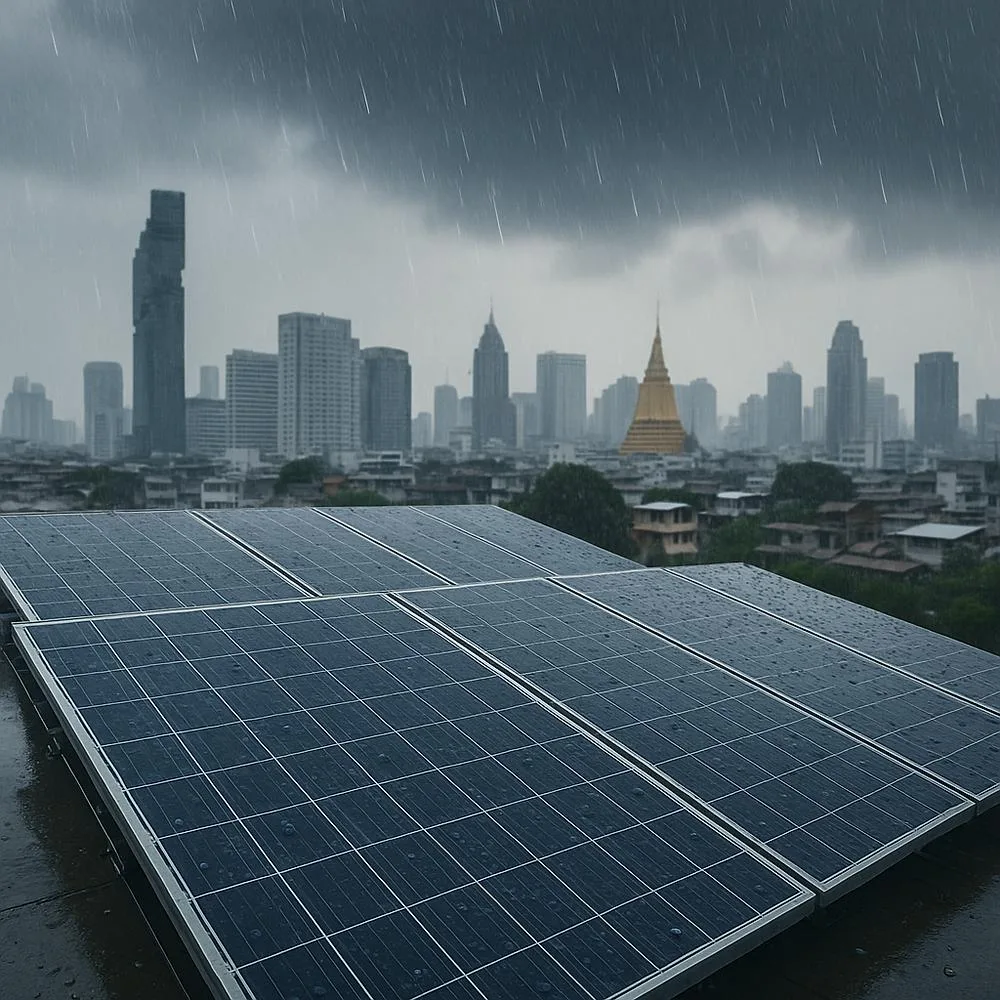
How Can Solar Rooftop Systems Enhance Energy Resilience During Floods and Power Outages?
Understanding the Differences Between Solar On-Grid and Solar Hybrid + Battery Systems, Along with Essential Design Considerations for Flood-Prone Areas to Enhance Electrical Safety and Energy Continuity.
During the rainy season or flooding events, concerns extend beyond potential damage to homes, buildings, and properties. Another critical aspect that should not be overlooked is electrical safety and the continuity of energy supply.
In areas experiencing severe flooding, electricity providers may need to temporarily suspend power distribution in certain locations to prevent electrical leakage and other potential hazards.
The Provincial Electricity Authority (PEA) has emphasized the importance of flood monitoring, inspecting electricity distribution systems, and implementing appropriate safety measures in flood-affected areas.
This raises an important question:
If a home or building is already equipped with a Solar Rooftop system, can it continue supplying electricity during floods or power outages?
The answer depends on the type of Solar Rooftop system, its installed equipment, and whether an appropriate backup energy system has been incorporated into its design.
1. Solar On-Grid: Reducing Electricity Costs, but Not Providing Backup Power During Outages
Solar On-Grid is a solar power generation system connected to the utility grid. It is commonly installed in residential properties, office buildings, and commercial facilities to help reduce energy expenses.
The system converts sunlight into electricity for use within the building during daylight hours, reducing dependence on electricity purchased from the utility provider and contributing to long-term energy cost savings.
However, when a grid power outage occurs, a conventional Solar On-Grid system automatically stops supplying electricity, even if the solar panels are still receiving sunlight.
This is due to a safety mechanism known as Anti-Islanding Protection, which prevents electricity from being fed back into the utility grid during an outage. This mechanism is essential for protecting utility personnel carrying out maintenance or repair work.
Therefore, installing a Solar On-Grid system alone does not necessarily mean that a home or building can continue using electricity when the utility grid goes down.
2. Solar Hybrid + Battery: An Alternative Energy Backup Solution for Emergencies
For homeowners, building operators, and businesses seeking greater energy preparedness, a Solar Hybrid system integrated with Battery Energy Storage can be considered.
This configuration allows electricity generated by solar panels to be stored in batteries. When equipped with a compatible inverter, backup functionality, and appropriate electrical components, the system can be designed to supply electricity to designated backup circuits during a power outage.
Examples of equipment that can be included as Backup Loads are:
- Indoor lighting systems
- Wi-Fi routers and internet equipment
- Mobile phones and communication devices
- Refrigerators for food preservation
- Fans and essential household appliances
- Computers and equipment necessary for business operations
However, the duration of backup power availability depends on several factors, including battery storage capacity, remaining stored energy, the power consumption of connected appliances, and actual usage patterns.
According to the U.S. Department of Energy (DOE), integrating Solar Energy with Energy Storage can enhance resilience during utility grid disruptions and support the operation of essential electrical equipment when properly designed and configured.
Important Safety Note: Even when a Solar Hybrid + Battery system includes backup power functionality, it should not be operated if electrical equipment or the surrounding installation area has been affected by flooding until a qualified professional has inspected and confirmed that the system is safe to use.
3. What Should Be Considered When Installing Solar Rooftop Systems in Flood-Prone Areas?
Solar Rooftop installation should not be evaluated solely based on the number of solar panels, installed capacity (kW), or potential electricity cost savings.
Environmental conditions and location-specific risks must also be considered, particularly for buildings located in areas with recurring floods, heavy rainfall, or inadequate drainage.
The U.S. Department of Energy has published guidelines titled Preventing and Mitigating Flood Damage to Solar Photovoltaic Systems, highlighting the importance of site assessment and appropriate equipment placement to minimize potential flood-related damage.
Key considerations include:
1. Install Inverters and Electrical Equipment Above Expected Flood Levels
Electrical components should be installed in locations appropriate to the surrounding environment, taking into account historical flood levels and potential future flooding risks.
2. Plan Battery Installation Locations Carefully
Battery storage equipment should be installed in accordance with the manufacturer's requirements, in areas protected from flooding and with environmental conditions suitable for safe operation.
3. Design Electrical Wiring and Conduits with Safety in Mind
The electrical system design should consider potential water flow and minimize the risk of water entering control cabinets and electrical components through cable conduits or other access points.
4. Inspect the System Before Re-Activation After Floodwaters Recede
If Solar Rooftop equipment or electrical components have been submerged or exposed to floodwater, users should avoid touching, switching on, or attempting to restart the system themselves.
A qualified professional should inspect the equipment and assess any potential damage before the system is returned to operation.
For equipment that has been fully submerged, replacement may be necessary depending on the extent of the damage and the manufacturer's specifications.
Prioritizing electrical safety from the initial design stage can help minimize property-related risks and improve long-term system readiness.
4. The Benefits of Solar Rooftop Go Beyond Electricity Cost Savings
Although reducing energy expenses is one of the primary benefits of Solar Rooftop systems, a properly designed installation can also play an important role in emergency energy management.
This concept is known as Energy Resilience, which refers to the ability to respond to disruptions in the primary energy supply while maintaining access to electricity for essential operations.
Different Solar Rooftop configurations can be considered depending on the intended application:
Energy RequirementsRecommended SystemReducing electricity costs during daylight hoursSolar On-GridReducing electricity costs while storing excess energySolar Hybrid + BatteryProviding backup electricity during power outagesSolar Hybrid + Battery with a properly designed backup systemMaintaining energy continuity for buildings or businessesSolar integrated with Energy Storage and essential load management
Selecting the right technology is therefore just as important as determining the appropriate installed capacity.
Each home and building has different electricity consumption patterns, operational requirements, and site-specific limitations that should be evaluated before installation.
5. Plan Your Energy System Today for Greater Long-Term Preparedness
Flooding and power outages highlight that energy management is not solely about monthly electricity expenses. It also involves safety, continuity in daily living, and uninterrupted business operations.
For those considering Solar Rooftop installation, evaluating energy requirements, equipment placement, and the need for backup power from the initial planning stage can support better system selection and long-term performance.
Solar Rooftop is more than an alternative for reducing electricity costs. When properly designed, it can also become an important part of enhancing long-term energy preparedness for homes and businesses.
Nexza Solar | Energy Solutions Designed for Your Needs
Nexza Solar provides site surveys, system design, and Solar Rooftop installation services for residential and commercial properties.
Our approach considers electricity consumption patterns, site characteristics, energy generation efficiency, and system safety to help ensure that each solar investment meets long-term operational needs.
Interested in installing Solar Rooftop or determining the right system capacity for your property?
Simply send your electricity bill to Nexza for a FREE initial consultation and preliminary solar system capacity assessment, with no additional charges.
Business Hours: 08:00 AM – 06:00 PM
Tel: 02 642 1199 or 095 437 7150
LINE Official Account: @nexzasolutions
Facebook: Nexza
References
1. Provincial Electricity Authority (PEA)
PEA Flood Monitoring and Electrical Safety Measures
Information regarding electricity distribution system inspections and safety measures implemented in flood-affected areas.
https://www.pea.co.th/news/corporate-news/2466
2. U.S. Department of Energy (DOE)
Solar and Resilience Basics
An overview of the role of solar energy in improving energy resilience, the limitations of grid-connected solar systems, and their integration with Battery Storage.
https://www.energy.gov/cmei/systems/solar-and-resilience-basics
3. U.S. Department of Energy (DOE)
Solar Integration: Solar Energy and Storage Basics
Information on solar energy storage and the role of Battery Storage in electricity systems.
https://www.energy.gov/cmei/systems/solar-integration-solar-energy-and-storage-basics
4. U.S. Department of Energy (DOE)
Preventing and Mitigating Flood Damage to Solar Photovoltaic Systems
Guidelines for preventing and minimizing flood-related damage to Solar PV systems, including site risk assessment and appropriate electrical equipment placement.
https://www.energy.gov/cmei/femp/preventing-and-mitigating-flood-damage-solar-photovoltaic-systems
Disclaimer: This article is intended to provide general information about Solar Rooftop systems and energy management during flooding events. System selection, installation, and operation should be assessed by qualified engineers or relevant professionals, taking into account applicable electrical safety requirements, manufacturer specifications, and actual site conditions.