When people hear the term Facility Management (FM), they often think only of cleaning, security, or building maintenance. In reality, Facility Management covers a much broader scope.
FM involves the management of buildings, workplaces, engineering systems, support services, assets, risks, technology, and long-term planning. Its purpose is to ensure that facilities effectively support business operations in a way that is safe, efficient, cost-effective, and sustainable.
In general, the scope of Facility Management can be divided into three key areas: Hard Services, Soft Services, and Strategic FM.
What Is Facility Management?
Facility Management refers to the management of buildings, workplaces, support systems, and working environments to ensure that employees and business processes can operate efficiently.
Facility Management focuses on integrating People, Place, and Process to support an organization’s core business activities.
Therefore, FM is not simply about keeping a building operational. It also involves cost control, risk management, workplace safety, efficient resource utilization, and long-term facility planning.
The 3 Key Areas of Facility Management
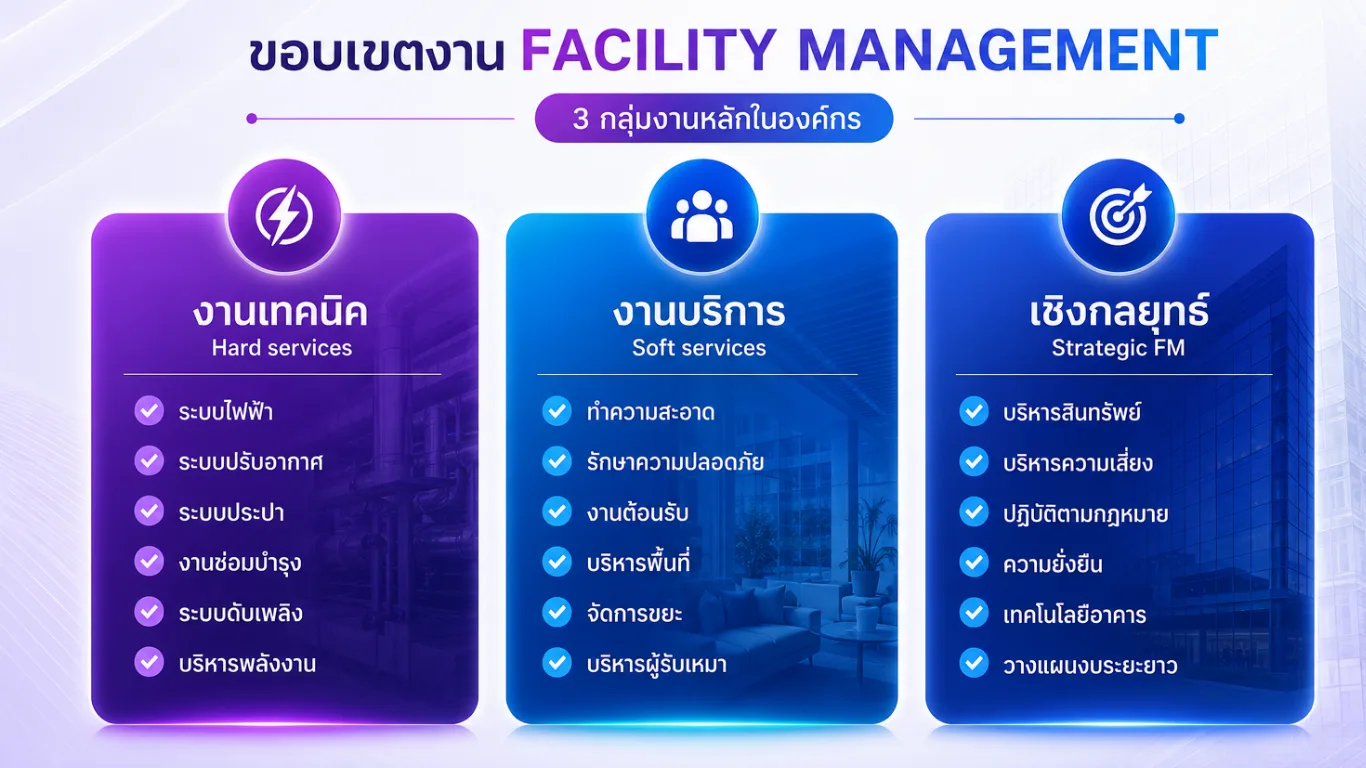
1. Hard Services
Hard Services refer to the physical, engineering, and technical systems that are essential to the operation and safety of a building.
These services require regular inspection, maintenance, and compliance with relevant safety and engineering standards.
Electrical Systems
Facility Management teams are responsible for monitoring and maintaining electrical systems within the building, including:
- Main electrical systems
- Electrical control panels
- Backup power systems
- Generators
- Lighting systems
Proper maintenance ensures that electrical systems remain safe, reliable, and continuously available.
Air Conditioning and Ventilation Systems
Facility Management also covers HVAC systems — Heating, Ventilation and Air Conditioning, including:
- Air-conditioning systems
- Chillers
- AHUs
- FCUs
- Ventilation systems
Effective HVAC management helps maintain indoor air quality, occupant comfort, and energy efficiency.
Plumbing and Sanitary Systems
This area includes the maintenance of:
- Water supply systems
- Wastewater systems
- Water pumps
- Water storage tanks
- Sanitary systems
- Drainage systems
Regular maintenance helps prevent leaks, blockages, system failures, and other issues that could disrupt building operations.
Maintenance Management
Facility Management is responsible for planning and carrying out maintenance activities across various building systems.
One of the most important approaches is Preventive Maintenance, which helps reduce the risk of unexpected equipment failures and extends the service life of machinery and building systems.
FM also includes Corrective Maintenance, which focuses on repairing or resolving problems after a fault or system failure has occurred.
Fire Protection and Building Safety Systems
Facility Management teams also oversee safety-related systems such as:
- Fire alarm systems
- Fire suppression systems
- Fire extinguishers
- Fire pumps
- Smoke detection systems
- Emergency exits and escape routes
These systems must be maintained and tested regularly to ensure readiness in the event of an emergency.
Energy Management
Energy Management is another critical responsibility of Facility Management.
Typical activities include:
- Monitoring electricity consumption
- Analyzing energy usage
- Reducing unnecessary energy consumption
- Improving equipment efficiency
- Developing energy cost reduction plans
Effective energy management not only helps reduce operating costs but also supports an organization’s sustainability objectives.
2. Soft Services
Soft Services focus on people, workplace experience, and the overall environment within and around a facility.
The objective is to create a workplace that is clean, safe, organized, comfortable, and convenient for building occupants and visitors.
Cleaning Services
Cleaning services cover various areas, including:
- Office areas
- Lobbies
- Meeting rooms
- Restrooms
- Common areas
- Outdoor areas
Facility Management also establishes cleaning standards and monitors service quality to maintain a consistent workplace environment.
Security Services
Security services may include:
- Access control
- Visitor screening
- Security patrols
- Monitoring unusual activities
- Emergency response support
These services help protect employees, visitors, assets, and property within the facility.
Reception and Concierge Services
Reception and visitor support services may include:
- Reception
- Front Desk
- Concierge
- Visitor Management
These functions serve as an important point of contact between the organization and its visitors while contributing to the overall user experience.
Space Management
Space Management involves planning and managing workplace areas to match the organization’s operational requirements.
This may include:
- Office space allocation
- Meeting room management
- Common area planning
- Space utilization analysis
Effective space management helps organizations use available space more efficiently while supporting employees and business activities.
Waste and Environmental Management
Facility Management also covers the collection, separation, handling, and disposal of waste.
Organizations may implement Waste Management and recycling programs to reduce environmental impact and support broader ESG objectives.
Vendor and Contractor Management
Facility Management also plays an important role in managing external vendors and contractors, such as:
- Cleaning companies
- Security service providers
- Maintenance contractors
- Building system service providers
The FM team may be responsible for monitoring service quality, safety standards, Service Level Agreements (SLAs), costs, and contractor performance.
3. Strategic FM
Modern Facility Management extends beyond day-to-day building operations.
Strategic FM uses data, technology, and management frameworks to align facility operations with the organization’s long-term business objectives.
Asset Management
Asset Management focuses on managing building assets throughout their life cycle, including:
- Machinery
- Equipment
- Engineering systems
- Buildings and building components
Asset information allows organizations to plan maintenance, equipment replacement, capital investments, and budgets more effectively.
Risk Management
Risk Management involves identifying and assessing risks that could affect the facility or business operations, such as:
- Electrical system failures
- Equipment breakdowns
- Fires
- Flooding
- Emergency situations
- Failure of critical building systems
Facility Management teams develop preventive measures and response plans to reduce the impact of these risks.
In many organizations, FM also supports the Business Continuity Plan (BCP) to help maintain business operations during emergencies or disruptions.
Legal and Regulatory Compliance
Compliance is another important area of Strategic FM.
Buildings and facilities must comply with relevant laws, regulations, and standards, which may include:
- Building control regulations
- Safety requirements
- Environmental regulations
- Mandatory building and system inspections
Facility Management teams are therefore responsible for monitoring compliance requirements and maintaining relevant documentation.
Sustainability
Facility Management plays a major role in supporting Sustainability initiatives.
Key activities may include:
- Reducing energy consumption
- Reducing water usage
- Minimizing waste
- Improving resource efficiency
- Supporting carbon emission reduction
FM can also support Green Building initiatives and broader ESG strategies.
Building Technology
Modern Facility Management increasingly relies on technology to improve operational efficiency and decision-making.
Common technologies include:
- CAFM – Computer-Aided Facility Management
- CMMS – Computerized Maintenance Management System
- IoT Sensors
- Building Management Systems (BMS)
- BIM – Building Information Modeling
- Dashboards and Business Intelligence tools
These technologies enable organizations to monitor equipment status, plan maintenance, analyze facility data, and make more informed decisions.
Long-Term Planning
Facility Management also involves long-term planning for budgets, maintenance, asset replacement, and building system investments.
Examples include:
- Life Cycle Planning
- Capital Expenditure Planning
- Equipment replacement plans
- Building improvement plans
- Cost reduction strategies
- Energy efficiency improvement plans
Long-term planning helps ensure that facilities can continue to support business operations and organizational growth over time.
Why Is Facility Management Important to an Organization?
Effective Facility Management provides organizations with several important benefits.
1. Reduces Operating Costs
Preventive Maintenance, energy management, and data-driven planning can help reduce emergency repair costs and unnecessary resource consumption.
2. Reduces the Risk of Building System Failures
Regular inspections and maintenance help reduce the likelihood of system failures that could interrupt business operations.
3. Improves Safety
Facility Management plays a direct role in maintaining safety standards for buildings, engineering systems, employees, visitors, and other building users.
4. Supports Employee Productivity
A clean, safe, comfortable, and properly managed workplace can contribute to better employee productivity and satisfaction.
5. Improves Asset Management Efficiency
Maintenance records and equipment data help organizations make better decisions about when assets should be repaired, replaced, upgraded, or retired.
6. Supports Sustainability Goals
Efficient management of energy, water, waste, and other resources supports organizational sustainability and ESG objectives.
7. Supports Long-Term Business Operations
Strategic FM helps organizations align facility budgets, technologies, assets, and risk management strategies with long-term business objectives.
Conclusion
Facility Management is much more than building maintenance. It is a comprehensive management function that covers engineering systems, workplace services, asset management, risk management, technology, sustainability, and long-term planning.
The scope of Facility Management can be divided into three key areas:
Hard Services — Managing engineering systems and ensuring building reliability
Soft Services — Managing workplace services and improving the experience of building occupants
Strategic FM — Managing assets, risks, technology, data, sustainability, and long-term planning
When these three areas work together effectively, Facility Management can help organizations control costs, reduce risks, improve operational efficiency, and create a workplace environment that supports sustainable business growth.